Celtic
Hearth
Sit by the fire. The gods, the fair folk, and the old green world are waiting to read for you.
Greenwood Hearth
The tree-alphabet is old Ireland’s own; the wheel of thirteen birth-moons is the modern tradition grown upon it. Both are honoured here.

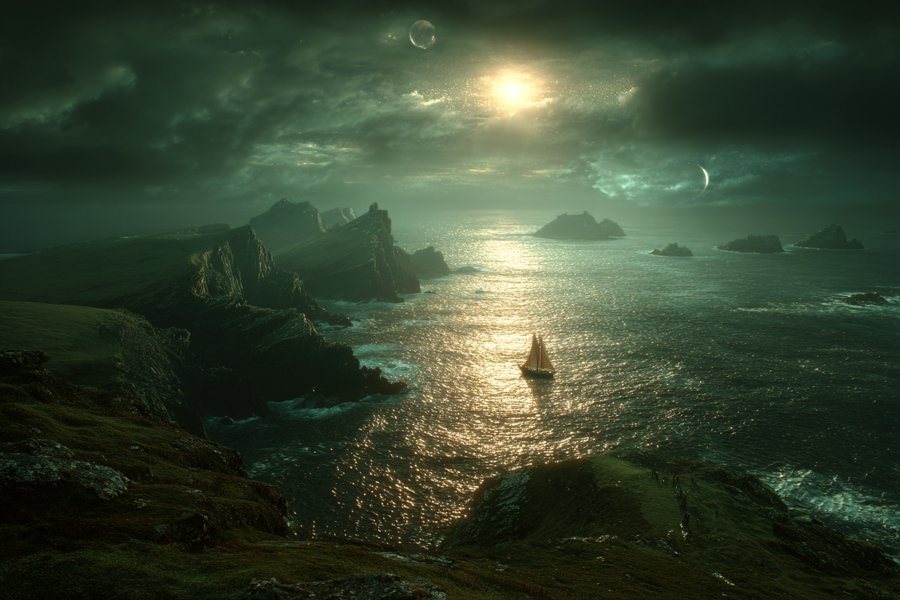
Mist stands on the water and does not move. This is the border shore — Avalon lies somewhere past the third breath of it, apple-sweet. The old Welsh called this whole matter theirs before any king wore it: Myrddin the wild prophet, Annwn of the cauldron, and the woman of the water who gives gifts with terms attached.
The blade the water lent. It was never a gift — it was a loan with a witness.
She answers as she gave the sword: sideways, truly, and with the price named. One question at the shore each day; Hearth members may sit in the barge.
Rex quondam, rexque futurus — the once and future. The barge took him wounded to the apple-isle, and the story refuses, in every century, to call him dead. That refusal is the whole engine of hope, and the Welsh built it.
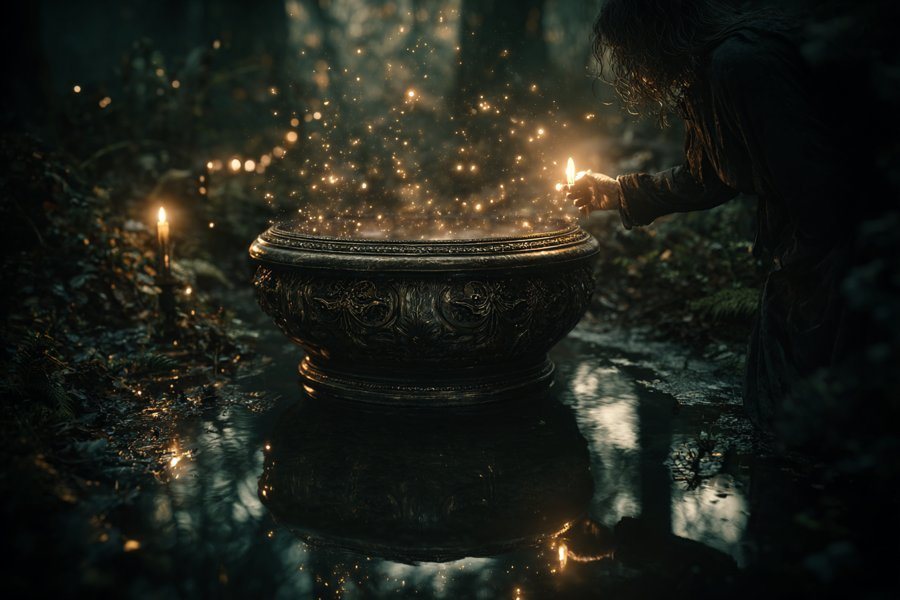
Before it was a cup it was a cauldron, and before a cauldron, a promise: that no one true of heart goes empty. It is seen only sideways, and never twice.

Who reads for you tonight?
Each keeper of the old ways sees your cards differently.
Sail the hidden sea. Tap an isle to see who dwells upon its shore.
Each day the sea allows one crossing. Land on an isle, hear its telling, and carry its boon home to the hearth.
Your currach waits at the shore.
Each day you may make one crossing. Land on every isle, gather its boon, and sail the whole of the hidden sea.
Every voyage ends at the House of Donn. Finish the Immram and your hearthfire is changed for good.
The gods, the fair folk, and the things that walk the mist. One sealed page resolves each day you return; Hearth members read them all.
The hedge chooses three: what shelters you, what heals you, and what you must not touch.

The hedge was Ireland’s first pharmacy and its first law-book: elder never burned, nettle picked with thanks and a sting accepted as fee, yarrow under the pillow for true dreaming. The bean feasa — the wise woman — asked the plant before cutting, and left a hair or a crumb in trade. Nothing here is free; everything here is fair.
Every plant the hedge offers is pressed into your garden and kept there. Folklore and tree-lore only — never medical guidance, and never taste the baneful ones.
The druids read the sacred waters — a gate to the Otherworld. Choose your water, still your mind, and let a vision rise.
Imbas forosnai · the dream-seeing
Set an intention before you sleep and the old prophecy-trance answers by morning — a vision waiting when you wake. A deeper rite of the fili, unlocked with the Hearth.
The name is read as knowledge that illuminates — not a vision granted, but a light thrown on something that was already there.
This is the detail worth carrying out of this screen. Cormac records that Patrick banned the first two and permitted the third, and gives the reason plainly: the other two required an offering, and the offering went to demons. Dichetal do chennaib needed nothing but the poet's own mouth, so it was allowed to continue.
A Christian bishop auditing three pagan techniques and licensing precisely the one with no altar in it tells you what the objection actually was. Not the seeing. The paying.
Notice what the rite is actually built to do. It puts the succession beyond the reach of whoever is strongest in the room, and it puts a death sentence on the only man who could rig it.
No medieval Irish or Welsh source describes a druid divining by gazing into still water. The classical writers who describe druidic divination — Pliny, Tacitus, Diodorus — describe augury and sacrifice, which is a different thing and not a gentler one. Water-gazing as a named practice belongs largely to the modern revival, and takes its shape from Renaissance and Mediterranean scrying rather than from anything Insular.
The three waters here are an honest invention — a way of choosing what you are asking about. The three illuminations above are not. That is the line, and it runs straight through the middle of this screen.
Togail Bruidne Da Derga — the tarbfeis that selects Conaire Mór.
Serglige Con Culainn — a second account of the bull-sleep.
Pliny, Naturalis Historia XVI · Tacitus, Annals XIV — the outside view: hostile, secondhand, and the only contemporary witness there is.
The pool does not show the future; it shows the parts of the present you have been refusing. Kneel. The old seers fasted a day first, and lay with thumbs against their eyelids — imbas forosnai, the knowledge that illuminates. What rises in dark water rises on its own terms. And moored at the pool’s far lip, always, a currach — the little skin boat of the westward crossing. No one keeps it there. It is simply always there, the way an exit is always somewhere in a dream.
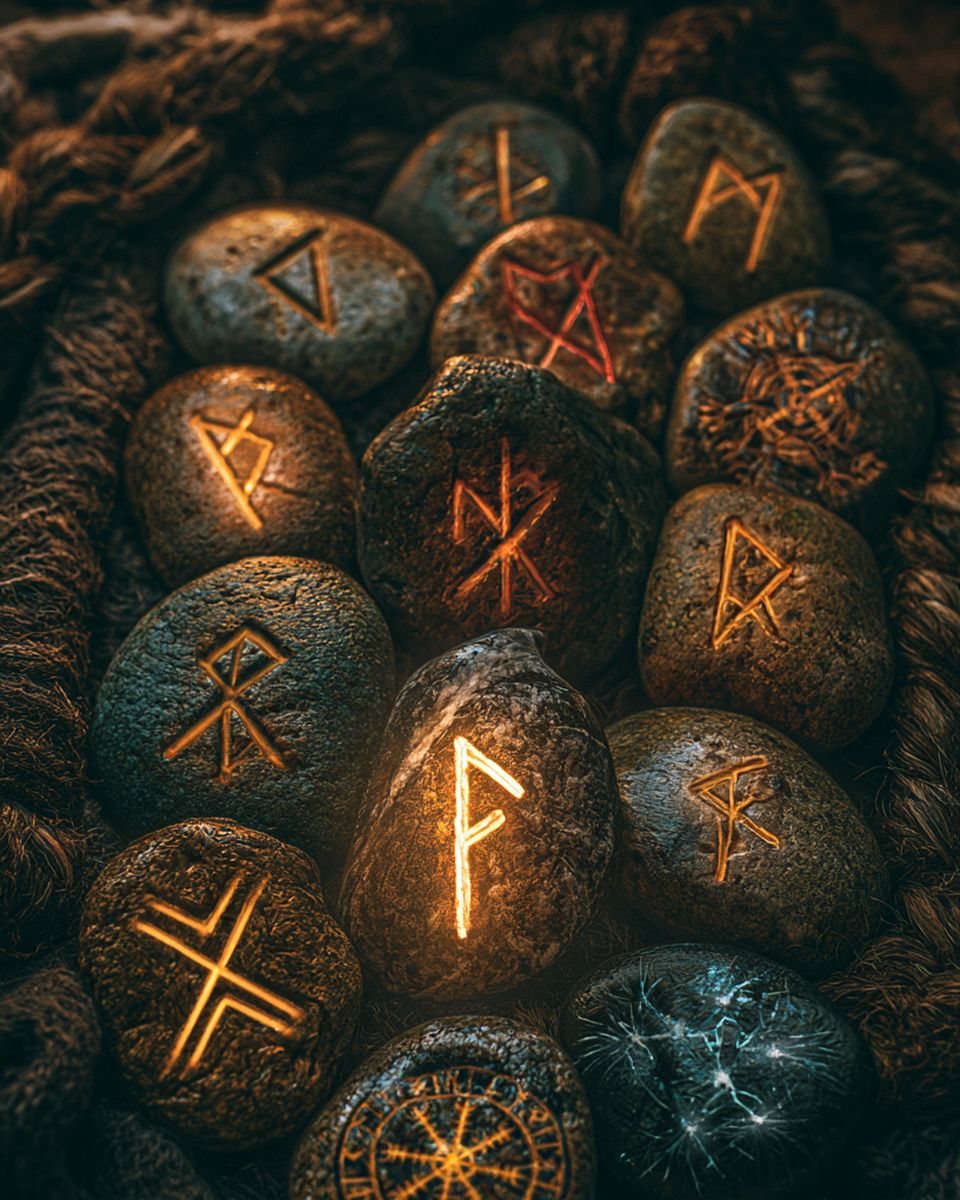
A cousin from across the water. The Ogham is our own tongue — but for a second sight, cast the Elder Futhark.
Honest note
Runes are Norse, not Celtic — kept here as a clearly-marked cross-tradition casting for those who know them. The Ogham remains the app’s own tongue.
The old carved tongue of the druids — twenty trees, each a letter and an omen.
Carve your name in the trees
The old craft-cipher of the hedge-witch — the Theban hand, for what should not be read at a glance.
Two scripts live here: Ogham, our own tree-tongue for oracle and record, and the Witches’ Alphabet above for ciphered notes in your Book of Shadows. Authentic Theban glyphs drop in as a font when you have one.
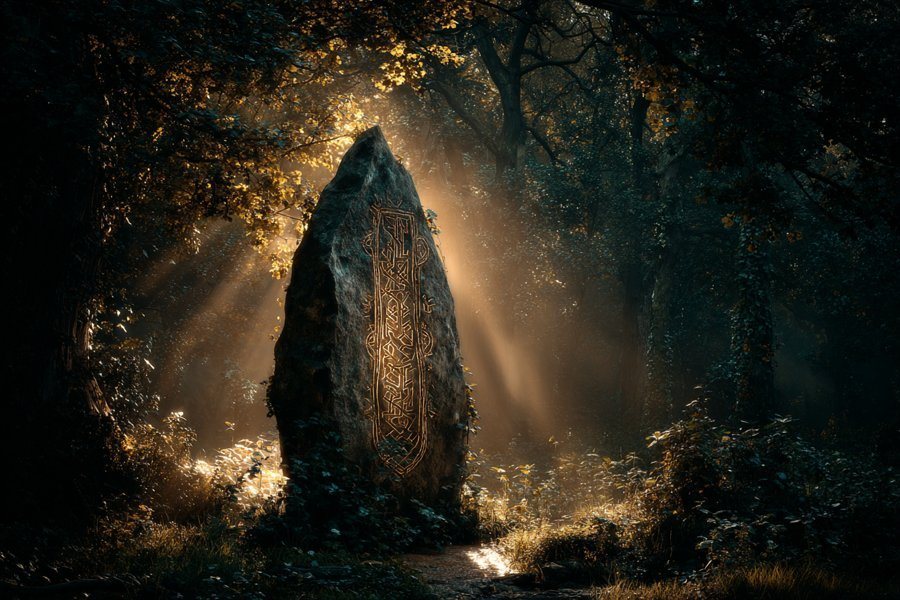
Every letter here is a tree, and every tree was once a law: which could be cut, which never, which only with apology spoken aloud. The filid carved words onto stave-edges because paper burns and stone does not care. Between the third and fourth trees of this grove stands a sídhe-stone older than the alphabet — leave it the width of the path, and do not whistle passing it after dark.
A clootie well at the field's edge. Rags on the thorn, a coin in the silt. Leave something, and something answers.
Never take without leaving. The well answers what you paid for.
Never thank them directly. Gratitude settles the debt and closes the door. Leave something else instead.
Never give your true name. A name is a handle. The well has never asked for yours, and you should notice that.
A rag tied wet to the thorn: as the cloth rots, so the sickness leaves — that was the whole engineering of it, patience made visible. Wells kept saints’ names on top and older names underneath, the way a field keeps its stones. Never thank the well directly; thanks closes an account the well prefers open. Leave the coin, tie the rag, walk away without looking back at the water.
Stand in them
Sí an Bhrú with the solstice light coming up the passage, a stone circle at dawn,
a roundhouse with the fire in, the crossing west, and the clootie well at night.
Drag to look, pinch to draw near, tap what is carved.
The well remembers what you have left there.